
How to Get a Guaranteed ROI on Your Marketing Spend
Congratulations! You’re still in the game.
Now, what does it take to continue to succeed in today’s digital world as a small business?
Here’s what we know, from all the statistics we’ve researched, the Small Business Administration1 (SBA), CB Insights2, and others:
- 15% of small businesses failed because they had poor marketing results,
- 14% failed because they ignored their customers,
- 19% failed because the competition outperformed and outcompeted them,
- 13% failed because they mistimed a product for the market,
- 42% failed because they had a product or service that the market no longer needed,
- 17% failed because they had a product but no tangible business model,
- 17% failed because they had a product that is not user friendly,
- 18% failed because they had pricing or cost issues,
- 29% failed because they ran out of cash,
- 23% failed because they didn’t have the right team, and
- 82% failed because they experienced cash flow problems.
We also know from SBA statistics3 that two-thirds of all small businesses survive at least two years. Half of all small businesses survive at least five years, and one-third of small businesses will survive at least 10 years.
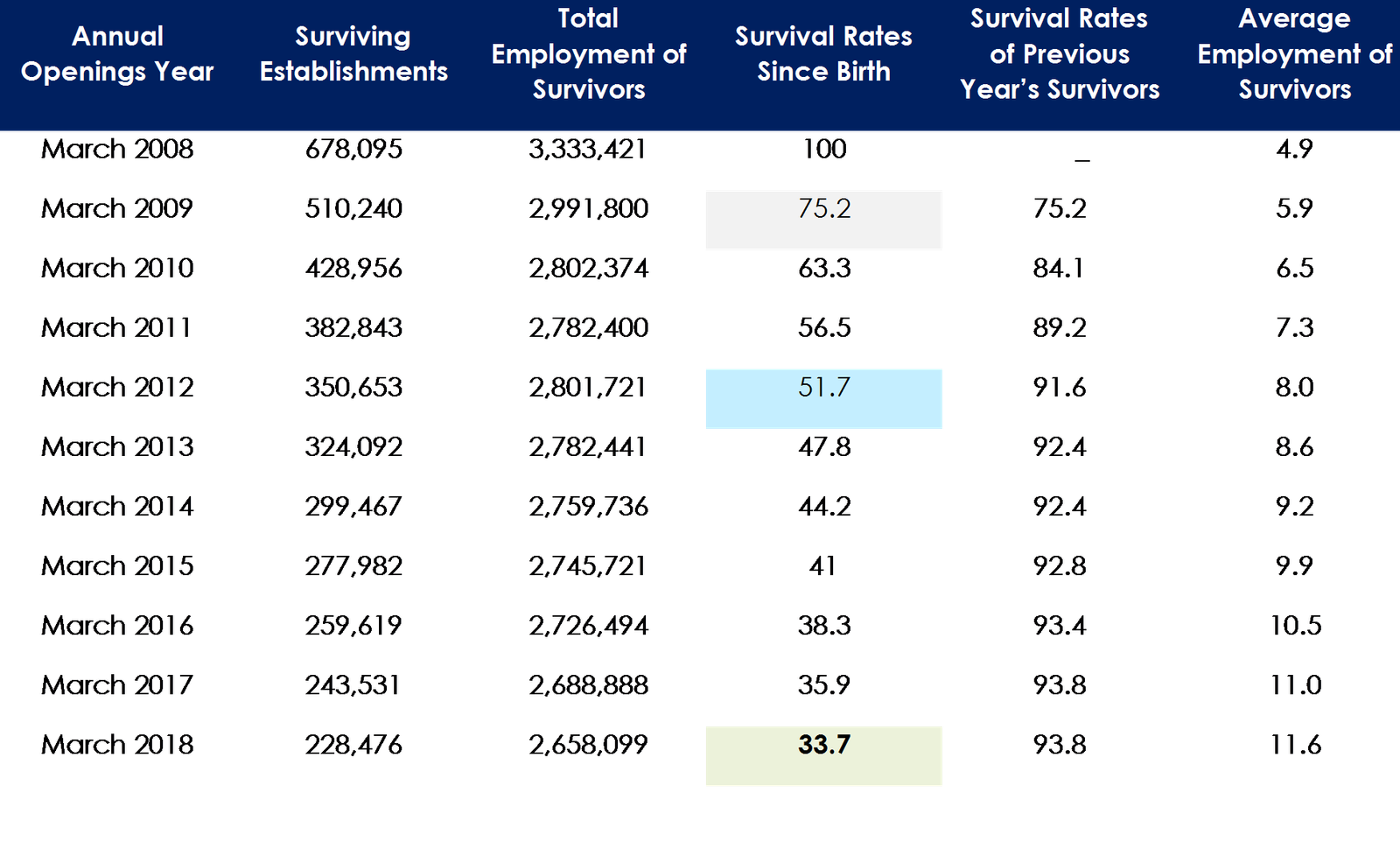
Table 1. Survival of private-sector establishments by opening year
So, congratulations again! You’re still in the game. You’ve done the six things we believe are essential to small business success:
- Attract and keep customers
- Have a product or service that has demand,
- Have the cash flow to operate,
- Access to capital to grow,
- Extensively use technology for efficiencies through automation, and
- Build and keep a good team of employees.
Now, how do you continue your success and continue to grow in this digital economy? Because in 2021, every business is a digital business. You may say to yourself that ‘my business is not digital. This research does not apply to my product or service.’ But are you willing to continue to bet that today’s digital world is not impacting your growth?
The late Peter Drucker considered the father of modern business management, made a profound observation we believe every small business should heed:
“Because the purpose of business is to create a customer, the business enterprise has two–and only two–basic functions: marketing and innovation. Marketing and innovation produce results; all the rest are costs. Marketing is the distinguishing, unique function of the business.”
Today, when we look at the top small businesses, their priorities are finance, sales, operations, management, legal, and people. Also, 66% of SMB owners are responsible for three or more of their business areas (Salesforce, 20174). Missing from the list: marketing and innovation.
In this article, we will assume that you have innovation “in hand,” so to speak, that you have at least two of the four below covered:
- You time your product or service for your market,
- is “evergreen” – it’s needed now and, in the future,
- has a solid business model, and
- is user friendly,
Based on the statistics, it’s the only way you got this far.
We focus the rest of this article on marketing and how to continue to make your business successful in the digital world.
What is Digital Marketing?
We like to use the Financial Times definition5, “the marketing of products or services using digital channels to reach consumers. The key aim is to promote brands through various forms of digital media.”
Those digital channels have less to do with the Internet than you think. Besides the Internet, they include mobile devices, electronic billboards, social media, digital radio, search engines, and other channels to reach consumers. And, it can do digital marketing both online and offline.
Digital Offline Marketing
It may surprise you to learn, or maybe not, that not all digital marketing is “online.” Let’s look a quick look at a few prominent offline digital media channels.
Local Marketing
Think about the last time you walked into a large restaurant. Or, have you been through United’s new Terminal C at Newark, American gates at Philadelphia International’s Terminal B, or United gates at Houston Intercontinental and seen the proliferation of iPads in these airport restaurants, advertising everything from donuts to perfume?
If you have a small business at the airport, it a great way to get your product in front of the customer. But the competition can be rough and expensive – as high as $20,000 a week sometimes.
Electronic Billboards
A digital billboard ad in any major city will set you back $15,000 – $20,000 a month.
And a lot of factors include traffic volumes, the number of people in each car, and where the billboard is in relation to the road. They base billboard prices on CPM, cost per thousand impressions, with the average price around $5. A billboard in your location with, say, 90,000 impressions a month will be about $450. Not bad. Renting a billboard space on Times Square for a year, however, will set you back a whopping $1,000,000 to $4,000,0006.
TV Marketing
And if you think that’s expensive, try buying a Superbowl ad on TV. That will set you back $10,000,000 per minute!!! And you know why? Because 62 million people watched the Super Bowl this year. Now think about what you can do online for a .0001% of that on YouTube marketing.
Radio Marketing
Did you know that 85% of the US population listens to the radio every week? And that, on average, people listen about two hours a day. Guess where? Yep, their cars. What a captive audience.
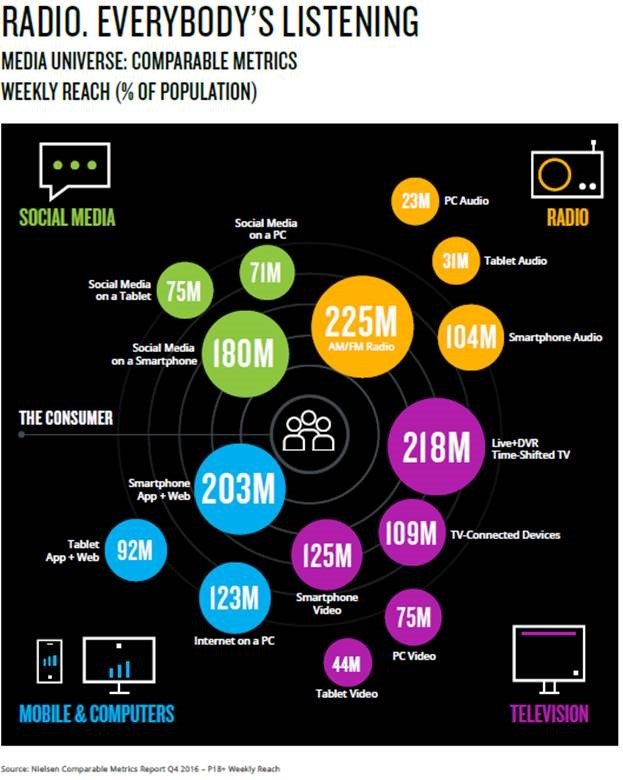
And one in two Americans listens to Internet radio at least once a month. But do you have the money to produce a creative radio commercial? Radio advertising can be as high as $5,000 or as low as $200 per week. It depends on the station and your locale. And don’t forget the production costs, copy, voice-over, editing, which is another $300 to $1000.
One strategy many entrepreneurs use, and it still works, is to get on a local radio show7. There you can talk about a topic in your industry and look to get your business a promo. But that’s a one-shot deal. What about getting your own radio show?
Our research8 shows you can expect an average of twelve times your return per dollar spent on a radio ad. However, we find that radio advertising is not for every small business. If your business is a niche market, look elsewhere.
Your ad may hit a broad audience, but you won’t get even close to the scale as you would with online advertising.
Phone Marketing
Eighty percent of internet users own a smartphone. In 2014 more people used their phones to access the Internet than their laptops or desktop computers.
Think about this. Your mobile phone is on a closed digital network – another captive audience. Mobile ad revenue in 2018 exceeded the amount spent on desktop ads. And how many ads do you see at the bottom of those “free apps” you use? Or when was the last time you got a text message or SMS to shop?
Using Online Digital Media Effectively
And if you still are on the fence about whether “all businesses are digital businesses,” then consider this. According to Nielsen’s latest Total Audience Report9, Americans aged 18 and older spend ten and a half hours a day watching TV, listening to the radio, or using their smartphones and other electronic devices.
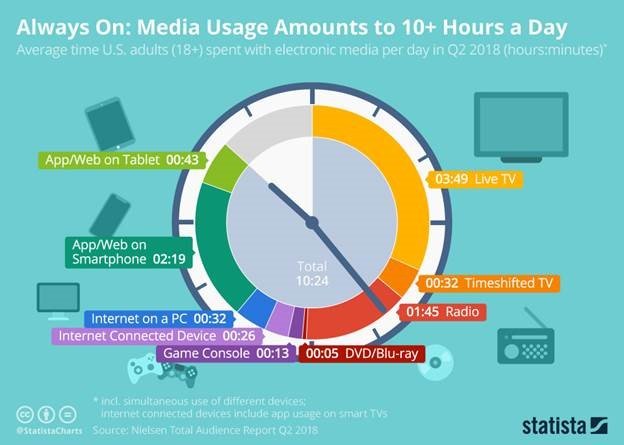
Americans are awake 16-18 hours a day.
Even if we account for all our multitasking efforts, you can’t deny that we spend over 60% of our time in front of some digital device!
Suppose you talk to some small business marketing experts. In that case, they will tell you that digital marketing is a new opportunity that requires a new way of understanding buyer behavior and psychology.
Marketing is the New Sales
According to a study by Google and Gartner’s Corporate Executive Board (CEB), over 50 percent of the sale is already complete by the time your sales engagement process even starts. More, “57 percent of the sales process has disappeared.“ So, where did it go?

In 2007, it took an average of 3.68 cold call attempts to reach a prospect; in 2019, it takes 8 attempts. Sales are made only 2% of the time on the first contact, 80% on the fifth to twelfth contact. Forty-four percent of salespeople give up after one “no,” 22% give up after two “nos’’,” and 14% give up after three “no’s.” The average salesperson makes 8 dials an hour and prospects for 6.25 hours to set one appointment
What are buyers doing if they’re not talking to sales?
Well, they are surfing your website, and your competitors’, to identify and qualify vendors, instead of the sales force qualifying them. They are engaging peers in social media networks to learn more about their needs, potential solutions, and providers. They are reading, listening to, and watching free digital content available to them with the click of a mouse. As a result, you and your sales force are no longer the sole sources or gatekeepers of information.
Marketing! It is the new sales. Advertising alone is not enough.
Truth is, marketing isn’t either! But if done, a well-executed Digital Marketing Strategy can explode the odds of bringing you more new clients. It speeds up if you tap into and master an understanding of the prospective buyers’ real-time intent they often expose in their digital world.
The Complexity of Online Digital Marketing
In just the last decade, the marketing world has been transformed. Spending on digital media surpassed television ads in 2017, global digital spending is expected to top $333 billion this year10.
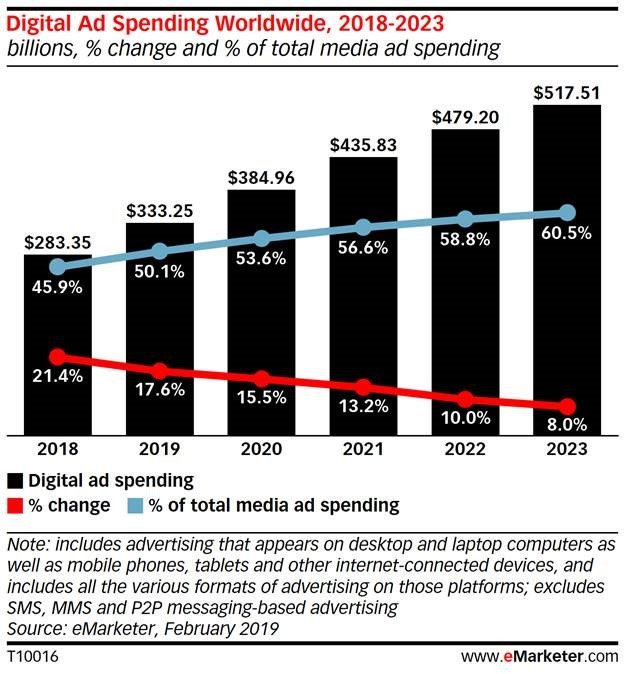
Today’s entrepreneurs and small businesses are thinking about marketing in almost only digital terms.
A successful online strategy needs essential data on what tactics are working.
The complexity of digital marketing is not something you want to undertake yourself.
The Case of JB Limo Service
Five years ago, John B. was forced out of his job as a marketing director after 15 years. His eldest daughter was on her way to college. He didn’t know what he would do. Ten months went by, and John had less than two months of his severance package left to figure something out. The mortgage was due; he was a payment behind, the mortgage company kept calling.
He had maxed his credit cards and needed to earn.
Thank goodness for Uber. John had driven taxis when he was in college. Within just over a week, John was behind the wheel of his car as an Uber driver. A few weeks later, John took a break eating lunch downtown when a small group of Limo Drivers pulled up to have lunch. John got to talking to them about their experiences versus driving for Uber. During the ensuing conversation, a brilliant idea comes to John. “Why not start a Limo Service?”
John called a few business friends and pitched the idea. They would call him back if he could convince them he knew how to get clients and run the business. John met with the Limo drivers to see if they would join his company. A handful agreed and signed letters of intent. Four weeks later, JB Limo Service was ready to go.

With five drivers and 39 customers, it excited John. They started with four drivers and 12 clients, and the business was growing. John executed his standard marketing plan he developed over 15 years: Identify the target market; Have a good message. His media reach was limited to a website, a Facebook page, and some ads in a few high-end local magazines. He bought lists of businesses to target and did lead capture using direct marketing postcards. It was cheaper. It was working, but he was not killing it.
Six months later, John got concerned. He was down to four drivers and had expected to have over 100 clients. He was stuck on 60. It seemed he couldn’t stop the customer churn. For every few clients he got, one stopped using the service. He had worked hard on the services he provided: door-to-door, music selection, in-car beverages, free Wi-Fi. “What is going on?” John thought. “I’m losing money now.”
One afternoon, out of curiosity, John googled JB Limo and found nothing on the first three pages. What he found on page four, sunk his spirits.
A 2-month-old review was posted on a site he had never heard of, and the review was scathing. David P., the reviewer, had complained that his JB Limo driver never showed up to take him and his wife to her 40th birthday. When he tried calling JB Limo, he got the infamous message, “your call cannot be completed as dialed.”
The phone number for JB Limo listed on his online source was wrong.
John and his marketing manager responded to the review. They sent an apology to David P. and offered a full refund. They instructed the review site to update JB Limo’s profile with their correct phone number, address, website, and operation hours.
John checked the company’s Facebook page. People had commented about his service, and again some were negative.
It overwhelmed John, and he was very concerned. His company’s online presence and reputation were not as stellar as he thought. But how could he fix that? And, if he couldn’t get at least 10-20 new clients in the next 30 days, the business might have to fold.
“What was I missing?” John thought. What had he not considered?
He thought his traditional marketing was working. But he must solve the digital world.
John reached out to one of his investors for help, who suggested a company called SURVEY ANALYTICS. They help Rethink Marketing, Drive Engagement, and Deliver Results.
The Challenges of Digital Marketing
Digital marketing poses unique challenges. Digital channels are spreading quickly.
Small business owners must keep pace with how they work, how potential customers use them, and how to use these channels for marketing their products and services.
Add to this that getting a customer’s attention is even more difficult, as they are bombarded with competing ads. Trying to analyze the mountains of data and make sense of the information lying in it is also a challenge beyond most small businesses’ capabilities.
The challenge of capturing and using data highlights that digital marketing requires a new marketing approach based on a new understanding of consumer behavior. For example, it may require your company to analyze new forms of consumer behavior, such as likes on Facebook, tweets on Twitter, or Yelp reviews.
Attracting and Keeping Customers
While most small businesses outsource at least one service, there may be more room for small business owners to mitigate challenges with out-placed business services. We believe digital marketing is one.
Knowing your target audience and knowing how to get their attention and convert them to leads and customers is a booming business’s most essential skill.
In a recent interview Keri Gohman, Head of Small Business Banking at Capital One, remarked that “competing and growing in today’s competitive and complex digital landscape can be tough – for small businesses with limited funds, resources and time.”
The current Capital One Spark Business survey11 shows 76 percent of small business owners face marketing challenges, including:
- (41%) – Identifying and reaching new customer prospects
- (39%) – Have executed no marketing initiatives in the past six months
- (32%) – Finding money to market their business
- (18%) – Gaining attention for local competition
- (18%) – Getting advice on the best marketing approaches
- (17%) – Customer retention
Over 64% of small business owners say they’re not able to market their businesses. And 70% say they would allocate more funds to marketing. Yet, only 8% say they have a partner who can provide insight or strategic direction.
Marketing Strategy: Meeting the Challenge
The trick to surviving out there as a small business is not to stare at the income statement. Instead, know where to go find customers, and predictably do so.
How do you find the proper direction? You need a partner who understands the battles in the digital arena and prospective customers’ mindset. Here is a four-step process you can execute on:
Step 1: Hone the Message in your Market
Your competitors are making arguments on why prospective customers should buy their product or service. Your message must be clear and targeted to those prospects who need what you have. It begins with knowing what prospects have heard and connected with already.
You want a snapshot of their perceptions, not their profound thoughts. What are your strengths and weaknesses, and those of the competition? What does your target group of customers think about the market?
Step 2: Define What Makes You Different
Walk down the street of any city, and you’re likely to find two small businesses offering the same product or service – from food to tax help. So, what makes one person walk into one establishment and not the other?
They’re different. Each business caters to different tastes or needs. They each offer something the other doesn’t that appeals to either of the people they serve.
So, you’re looking for something that separates you from your competitors. The secret to this is understanding that your differentness does not have to be product related.
Let’s say you own a small used car dealership. Consider a car purchase. Yes, cars are different. There are sports cars, SUVs, farm trucks, expensive cars, and on and on. But horsepower can differentiate sports cars, so too can performance, manufacturer, size, and so on. And what if you offered a 6-month warranty, instead of the standard 90-day one?
Step 3: Have the Credentials
There are many ways to set your company, product, or service apart. We can think of at least 10 ways12 you can differentiate. Finding that difference and using it to set up a benefit for your customer is what you must do.
But it takes more than building a logical argument for why you are different. You must make it real and believable, and to do so, you must show the credentials to support your argument.
If you have a customer engagement difference, then show it. That becomes your credentials. If you offer free onboarding support, you should directly compare offerings that don’t provide onboarding support or where onboarding is challenging.
But you just can’t claim you’re different without proof. If you’re going to “Think Differently” like Apple, then you’d better be about innovation and changing the world. “America runs on Dunkin’” means more people drink Dunkin’ Donuts coffee than any other brand. And be prepared to change, like BMW, from the “Ultimate Driving Machine” to being “Sheer Driving Pleasure.”
Forget smoke and mirrors. Today’s consumers are suspicious, they have a lot of information, and they’re thinking, “Okay, Mr. Small Business, let’s see the proof.”
You got to back up your argument in the court of public opinion.
Step 4: Publicize Your Difference
What’s the point of having a great product or service if no one knows about it? And even if they know about it, they don’t know how or why it’s different or better?
Nobody will call you, show up at your office door or your website just because you have something you think is excellent. Better products don’t win. Have you ever heard the phrase, “perception is reality?” Well, better perceptions win in the market. Your excellent product or service needs some help along the way.
Every part of your message should echo your difference. Your tagline and slogan. Your advertising. Your fliers and catalogs. Your web sites. Your sales presentations. Your small business needs to answer only one question for potential customers, “What makes this business different?”
That answer gives them something to latch on to and come looking your way for answers.
But, you say, “Like JB Limo Company, I have done all your steps with limited success. What else do I need to do?”
The secret weapon of all million-dollar small businesses is their execution of a digital marketing strategy that’s more than social media advertising.
To revolutionize how you market and therefore sell requires a new all-encompassing approach.
It begins with the Digital Marketing Toolkit, both mobile and web.
The Digital Marketing Toolkit
You have the outline of a powerful and proven strategy to execute with confidence.

But only a few small businesses are executing the digital strategy required to survive, thrive, and dominate their space.
Many are taking a noisy advertising approach.
Prospects aren’t listening, results are low and often unmeasurable. The impact on cash flow and the business owner’s ability to meet their government obligations is severe.
You can create a predictable stream of qualified prospect conversations to speed up your growth. Here are the tools:
- Presence Management
- Reputation Management
- Search Engine Optimization (SEO)
- Social Marketing
- Digital Advertising
- Accountability Metrics
It begins with Customer Reviews Management.
Customer Reviews Management
A website is the cornerstone of all your digital marketing activities. Alone, it is a powerful channel. Without it, you cannot execute a variety of online marketing campaigns. A website should present your brand, product, and services clearly and notably. It should be fast, mobile-friendly, and easy to use.
Almost all small businesses have listings, reviews, and social activity. It is essential to know where you’re excelling, where you’re underachieving. We start with Online Presence Management, both mobile and web.
Online Presence Management
According to search engine giant Google, the most sought-after information about a business online is your business address, hours of operation, and phone number.
Now imagine this all too often the scenario.
Imagine a hot prospect is searching on her mobile phone for your product or service. Mary finds you.
When she tries to call, she gets the infamous “your call cannot be completed as dialed” message.
The phone number listed on her online source for your business is wrong.
What could be worse?
What if John had an appointment to meet with you, left your card at home, searched a different online source, found your address, showed up, and it was an abandoned building. What if your address online is old or just plain wrong?
What do you think Mary and John would do?
That’s right, you lost those hot prospects forever. And, your competitor just got repeat buying clients, or worst, sources of game-changing referrals.
In its simplest terms, online presence management is your ability to ensure that all sources of search results are up to date with accurate information.
That your changes are distributed, and that your information is protected from sabotage by your competitors or evil actors.
Do you also understand that mobile internet usage is growing five times faster than desktop internet usage?
That means continued exposure to the misinformation about your business online increases.
And so does your risk.
Both users and search engines demand an omnipresence of accurate information. Without it, your growth strategy suffers.
Reputation Management
The web is full of people talking about your business. When people talk, your business starts to gain a reputation. This reputation becomes the most critical decision point for your prospects. In fact, your reputation is becoming the primary driver of your business’ future outcome.
Therefore, online reviews are critical to the success of a business as 90% of consumers in a recent study say they’ll only consider engaging a business if they have an average rating of 3-5 stars.
You best believe that John and Mary checked your reviews before engaging with you. So, capturing, monitoring, and responding to both positive and negative reviews is a necessary evil of our new digital world. Yes, it’s time-consuming and often a nightmare, but it must be done to survive.
On the bright side, mastering this step will enable super positive results. For example, you could leverage your happy customers to speed up the acquisition of new ones. It could also serve as a real-time feedback loop, enabling you to address the challenges discovered. Or it can serve as a catalyst for encouragement and positive vibes for your team.
At the risk of sounding like a nag, managing your reputation is critical to your success.
As the following four tools will be ineffective if both your presence and reputation management systems are not optimized.
Social Media Marketing
Finding a profit in social media is hard.
You need to create and post a steady stream of content to interact with prospects and your existing customers. You then need to engage and respond, manage multiple channels, create or find fresh content, and start the cycle again the next day or week.
Many small business owners find it satisfying, but most can’t deny that it results in more distraction. However, it must be done as social channels are another source of due diligence that your prospects use.
Mary will validate your reviews by search and your social presence for content and comments.
John may not move forward if you don’t see you engaged, even with the worst comment on earth about your business performance.
Both John and Mary will most likely do business with the business that addressed their negative comments.
It is unlikely they will do business with a competitor that didn’t even engage with them on their favorite channel.
Can you relate?
If true, and we know it to be from experience, it cannot be ignored or handled with an “I’ll get to it when I can” attitude. Often, people confuse social marketing with social advertising or promotions. Don’t be one of those!
Social marketing can be as simple as email marketing, which is still one of the most effective digital marketing channels. Many people confuse email marketing with spam email messages we all receive per day, but that’s not what email marketing is all about. Email marketing is the medium to get in touch with your potential customers or the people interested in your brand.
Yes, social marketing includes social advertising, but the management of engagements even more.
Search Engine Marketing
Social Media Marketing is all about your brand awareness in your market and establishing social trust. However, as you go deeper into social media marketing, you can use it to get leads or even a direct sales channel. You do that using Search Engine Optimization (SEO).
SEO is powerful but too often marketed as the silver bullet. It works so that the higher you are in the search results for your prospect’s keywords on search engines, Google, Bing, or Yahoo, for example, the more you will be seen and engaged. But, it takes time to see real results and often over six months.
On the flip side, paid advertising can produce quick results.
But do I want to run paid ads forever unless I plan to scale my business forever?
The most efficient tactic is one of balance. SEO is necessary.
Now let’s move on to tool number five, digital advertising.
Digital Advertising
Digital advertising needs little if any explanations, except that you are wasting money without the first four tools, if not compounding your problem. However, if combined to create a digital strategy, this is the catalyst for explosive and consistent results. Just do it right or ensure that whoever you engage takes the holistic approach shared here.
Pay-Per-Click (PPC) Advertising:
PPC advertising enables you to reach internet users on several digital platforms through paid ads.
You can set up PPC campaigns on Google, Bing, LinkedIn, Twitter, Pinterest, or Facebook.
You can then show your ads to people searching for terms related to your products or services.
PPC campaigns can segment users based on their demographic characteristics (age, gender, etc.) or even their interests or location. The most popular PPC platforms are Google Ads and Facebook.
Mobile Location-based Advertising
The emergence of mobile phones as the leading personal communications device portends their attractiveness as a lucrative media platform for marketers.
Location-based advertising is not new.
Mobile location-based advertising is a new form of marketing communication.
It uses location-tracking technology in mobile networks to target consumers with location-specific advertising on their cell phones.
These advertisements, which are more personalized in terms of the customer location, can be most effective because of these enhanced technological capabilities.
Paid advertising is a foundational element to your local small business’s marketing stack. It’s often how consumers first discover your business and learn more about the products and services you offer.
Results Management
How will you know if what you or your media partner is doing is working if you don’t measure the results?
How will you know where to optimize, what to cut, and what to increase your commitment to if you don’t have documented insight to enable performance analysis over time?
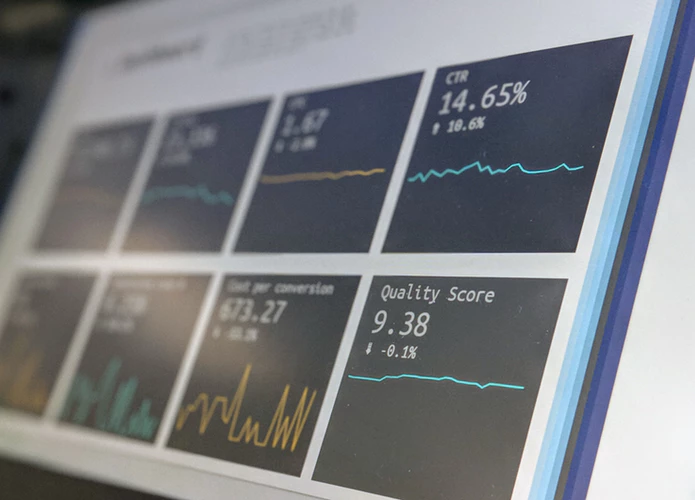
Manual reporting can be time-consuming if you don’t use a 6-tool process like this. But even if you don’t, understanding your ROI is critical to your success, making marketing so powerful. You can measure, monitor, and hold people accountable for the returns expected on your investments.
Measure, measure, measure. Regardless!
Manual reporting is time-consuming, not scalable, and eats into your margin. Use Advertising Intelligence to merge reporting from these advertising platforms:
- Google Search Ads
- Google Display Ads
- YouTube Ads
- Google Shopping Ads
- Gmail Ads
A new survey by Vendasta shows that building manual reports and showing return on investment are the most difficult parts of offering online advertising services to clients.
“Advertising Intelligence solves that overhead problem and delivers digital advertising reporting in an elegant and intuitive dashboard which can be shared to clients’ smartphones, email inboxes, and portals.”
JB Limo Service Finds Success
John clicked the button, “Schedule An Appointment.” The next morning, at 10:00 AM, Stephen from the Survey Analytics team called John.
During the one-hour appointment, Stephen and the Survey Analytics team explained their solution to the JB Limo Service online presence management problem. Stephen assured John that Survey Analytics would correct his business address, website, office hours, and phone number online. It would update them daily and protected them from sabotage going forward.
The Survey Analytics reputation management platform listened to all digital channels.
It alerted JB Limo on new reviews, commented via an AI robot, and prioritized them based on perceived sentiment.
But John was even more concerned about getting new leads and new customers. JB Limo was getting consistent 4-to-6 qualified leads per month. But they were closing on only two. That brought in an average of $2,000 per month in new revenue.
They needed 10-20 per month to stay open and maintain his lifestyle. Could Survey Analytics help?
Survey Analytics went to work. They engaged with the positive reviews and created sample replies to the negative ones for JB Limo to approve. They solved the online presence and reputation management problems using artificial intelligence and other marketing automation tools.
Survey Analytics created an SEO plan for John and provided his team with a step-by-step guide. Survey Analytics updated the monthly report with recommendations for the team to execute.
But the digital advertising world was a shocker for John, and he wanted to now know more.
Survey Analytics delivered some severe training to John and his team.
They explained the paradigm shift in the buyer journey.
Although skeptical, John knew he must embrace the digital media world.
John gave Survey Analytics the contract for digital marketing and advertising. They guarantee their work, so they eliminated his risk.
Yes, that’s right.
If Survey Analytics cannot deliver the ROI promised in writing, they will refund JB Limo the difference between the ROI they achieve and the ROI they promise.
Who does that?
With less than 10 days to go before the end of the month, Survey Analytics delivered five leads per day.
And with the scripted sales pitch, JB Limo had 48 leads and 31 new customers in the first month of working with Survey Analytics.
JB consulting was getting over 150 qualified leads a month now, and they received merged reports that anyone could understand.
John now had a partner whose automated six-step digital marketing strategy helps him conquer the new digital marketing world.
Their written guarantees removed the risk and helped him grow JB Limo and with confidence.
The Breakthrough: Bringing It All Together
You know now that every business is a digital business, including yours. So, how do you continue your success and continue to grow in this digital economy?
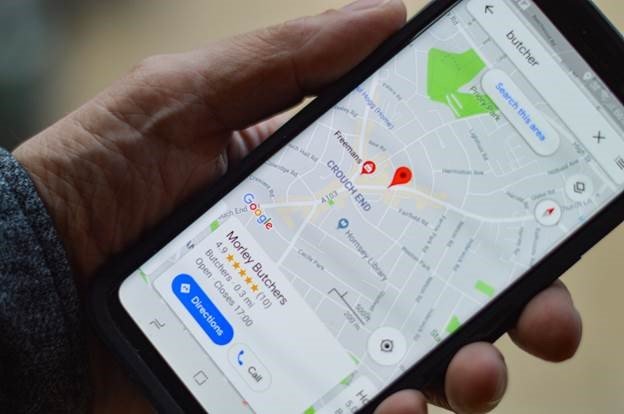
We have focused on online marketing and how to continue to make your business successful in the digital world. Digital marketing is a new opportunity that requires a new way of understanding buyer behavior and psychology.
And, the complexity of digital marketing is not something you want to undertake yourself.
Knowing your target audience and knowing how to get their attention and convert them to leads and customers is a booming business’s most essential skill.
You learned the four strategic objectives to implement in your digital marketing strategy:
- Step 1: Hone the Message in your Market
- Step 2: Define What Makes You Different
- Step 3: Have the Credentials
- Step 4: Publicize Your Difference
You were introduced to marketing automation, streamlined manual digital marketing tasks, letting your small business optimize its sales pipeline, lowering the cost of acquisition, and identifying hot sales opportunities.
You were introduced to JB Limo Service, who implemented the strategy using the Digital Marketing Toolkit:
- Presence Management
- Reputation Management
- Search Engine Optimization (SEO)
- Social Marketing
- Digital Advertising
- Accountability Metrics
The Toolkit helps you can create a predictable stream of qualified prospect conversations to speed up your growth.
The best part?
As a small business, you see real results.
Impressions, clicks, and even things like real-world store visits and phone calls — all delivered back to the business to help you see your ROI.
To top it all off, everything is managed by our team, so you can offer digital advertising services at scale.
I know you’ve tried to get a ton of qualified prospects before. And I know you’ve ended up disappointed. Listen up. It’s not your fault.
Almost everyone else who’s tried to get qualified prospects calling with predictability, without a proven digital strategy, ends up experiencing the same thing as you: disappointment. Frustration. Until now…
The SURVEY ANALYTICS BREAKTHROUGH STRATEGY differs from everything else out there. Let me explain.
Do you realize that a paradigm shift in the buying process has occurred? That over 57% of buying decisions occur before your sales team even interacts with the buyer? That 60% of buyers who go through your sales funnel will NEVER decide?
The buyer journey has changed.
We understand it, and we can help you meet them where and when they begin. Before making the next sales call, let us show you how you can flip that equation and reduce your losses by 39%.
If you’re not doing as well as you want, SURVEY ANALYTICS can help you save time!
Look forward to speaking with you.
SURVEY ANALYTICS BREAKTHROUGH STRATEGY SESSION
References
1 https://www.sba.gov/sites/default/files/Business-Survival.pdf
2 https://www.cbinsights.com/research/startup-failure-reasons-top/
3 https://www.bls.gov/bdm/us_age_naics_00_table7.txt
4 https://a.sfdcstatic.com/content/dam/www/ocms/assets/pdf/smb/Small-Medium-Business-Trends_Salesforce-Research.pdf
5 http://lexicon.ft.com/Term?term=digital-marketing
6 https://www.businessinsider.com/what-it-costs-to-advertise-in-times-square-2012-12?IR=T
7 https://fitsmallbusiness.com/radio-advertising/
8 http://www.cerasolistafford.com/wp-content/uploads/2017/09/RadioreDiscovered_Digital-3.pdf
9 https://www.nielsen.com/us/en/insights/reports/2018/q2-2018-total-audience-report.html
10 https://www.emarketer.com/content/global-digital-ad-spending-2019
11 http://press.capitalone.com/phoenix.zhtml?c=251626&p=irol-newsArticle&ID=2043233
12 https://doblin.com/ten-types